Total Pageviews

Thursday, January 30, 2014

Goodbye,G Bad Memories!

Goodbye, Bad Memories!

Science = Fun
Waffles = Fun
Scientific Waffles = Fun x2 = SUPAH FUN
Guess what? I'm going to erase your memory of that super cheesy intro! :3
GutBai!
That's right folks, neurologist Marijn Kroes is working on ways to erase the details of bad memories, and maybe erase them completely! A form of severe depression treatment called electroconclusive therapy (ECT for short) can lessen depression. But Kroes is testing with it, and saying that if patients try and remember specific details of the memories right before the treatment, the details are fuzzy and/or gone when they are done.

Well, that's all for today, Buh Bai!
Links:

Tuesday, January 21, 2014

Viruses: A New Kind of Enemy

Viruses: A New Kind of Enemy
        We have all found ourselves sick with the common cold or the flu, but do we ever actually think about how viruses work? Well, you're in luck, because today is the day you find out!

Modern Medicine Image Gallery        The first thing you need to know is that many scientists theorize that viruses are not, in fact, alive like you and me. Some evidence of this is that viruses do not move, they must be moved around by outside forces, like the wind blowing.

        Viruses make us sick by destroying our cells. If a virus lands on a cell, it will invade the cell. It will then inject a DNA (deoxyribonucleic acid) or RNA (ribonucleic acid) code into the nucleus of the cell, which will tell the cell to proceed to make more copies of the virus. Pathogenic viruses will kill the cell when they emerge, while other viruses don't. The animation to the left shows a pathogenic virus engaging in this process.
vaccine        Viruses kill hundreds of cells in your body alone every day! But you can stop this tragedy; and all you have to do is get a vaccine! The only way to combat a virus is to build up antibodies in your blood to fight off the viruses. Antibodies are produced when your body encounters a virus, but not enough are produced. A vaccine is a way to get extra antibodies before you get a virus, so you will be able to fight it off if it comes! A vaccine inserts a weakened version of the virus into your bloodstream, where your immune system can fight it off without your body getting damaged. Your body will produce a bunch of antibodies to help fight it, even though it doesn't really need them. It also produces memory cells, which keep watch for the virus in case it comes back.

        Antibodies only work for the type of virus they were made for, so a flu virus antibody wouldn't be able to attack a cold virus. Doctors make predictions on what type of flu will be most widespread each year, and give their patients that.

        Now for some of the good stuff.
Good stuff #1: Edward Jenner created the first vaccine LIKE EVER. It was for smallpox, and at the time, he didn't realize how important it would become.
Good stuff #2: Three different types of viruses are tuberculosis, ebola, and influenza (the flu).
Good stuff #3: Viruses can go latent, or dormant, and you can have it for a long time without knowing.

Saturday, December 14, 2013

The Intriguing Universe of Bacteria Part 2: Revenge of the Superbugs

The Intriguing Universe of Bacteria Part 2:

Revenge of the Superbugs


Welcome back to the SUPERTIFIC WAFFLE.
Oh, am I getting it wrong again?
Sorry, sorry, be back in a moment.

TAKE 2
Hello again, and welcome back to LE SCI-
Really?!
I thought I had it perfect!
That's someone else's blog?
Ohhhhhh.
*Murmurs something inaudible.
Got it.

TAKE 3
Hello, and welcome back to THE SCIENTIFIC WAFFLE!
Today we'll be learning about bacteria: and the newest news in the ongoing war with the bacteria kind.
Bacteria can be very helpful. We use them in food products, such as cheese and bread. They also turn nitrogen into something plants can use, instead of something that harms them. They even turned the world into the oxygen-filled paradise that we live in today!
But, as with all things in life, the bad comes with the good. And today we will be talking about the bad side of bacteria.


Fact: The bacteria in milk, which are used to make cheese and yogurt, are taken out by the process of pasteurization, which involves heating the milk.


Bacteria have a bad side though. They kill many, many people each year with their deadly sicknesses. They can cause diseases like tuberculosis, strep throat, and pneumonia.


Antibiotics are prescribed medicines that kill or disable bacteria. Overuse of these is causing problems. See, bacteria reproduce extremely fast, so they can evolve fast too. Genetic mutations, or slight differences in the genetic code, are common. These can occasionally result in a bacteria becoming resistant to certain antibiotic. When these reproduce more and more, the bacteria get stronger and stronger, until superbugs are made. These can't be killed by most antibiotics, and are incredibly strong.

Well, that's all for today, see you later at the SCIENTIFIC WAFFLE!

Links:
Frowny Face Picture
Milk Carton Picture
Red Bacteria Picture
Superbug (MRSA) Picture

Sunday, December 8, 2013

The Intriguing Universe of Bacteria

The Intriguing Universe of Bacteria

Hello again, and welcome back. Today I'm going to be serious (well, probably). It's finally time to talk about the last of the six kingdoms, archaebacteria and eubacteria.
To see how this all started, we need to TIME TRAVEL back to the past.


Now that we're here, lets talk about the six kingdoms. In the beginning, this guy named Carlos Linnaeus. He created the first version of the kingdom classification system. He divided all forms of life into animals and plants. Now lets dive deeper into THE INTRIGUING UNIVERSE OF BACTERIA. To see what changed Linnaeus's system, lets use our shrink ray and dive deep into the society of bacteria!

So, the first change that occurred in Linnaeus's system was when scientists found out about fungi. They looked at some mushrooms close up, and realized that they didn't make their own food.

Next are the protists and monera kingdoms. Scientists eventually discovered microscopic life forms and made the protist and monera kingdoms.

Finally, the monera kingdom was split into two different kingdoms, eubacteria and archaebacteria. They are both prokaryotic, meaning they have no nucleus, or a clump of genetic material bound by a membrane. Bacteria have a substitute called a nucleoid, which is a bunch of loose genetic material.

Fact: They reproduce by fission, where one cell splits into two identical ones.

Bacteria also have no organelles, except for ribosomes, which fuel the cell with protein. Oh, and bacteria are unicellular as well, meaning they consist of one cell each.

These amazing creatures have a cell wall, just like plants, but it doesn't help keep things in and out, it is only for structure. The cell is protected by the capsule and plasma membrane, on the outside of the cell. The cell is also covered in tiny, hairlike structures for moving around called pili, as well as a whip-like tail called a flagellum.

There is also only one major difference between the two types of bacteria. They have different chemical balances, so archea can live in extreme environments.

So now it's time to grow big again. 3... 2... 1... WAIT! I forgot, one more thing. Archaebacteria cannot breathe oxygen! Okay, 3... 2... 1... THE END

If you liked this post, feel free to leave a comment or follow my account. See ya later!

Links:
Fission Pic
Bacterial Cell Pic
Flagella Pic
Time Machine Gif (T.A.R.D.I.S.)
Brainpop

Saturday, November 23, 2013

Damsel in Distress!

"Oh, help me, help me, i'm stuck at the top of this horrible tower!"

Sorry Rapunzel, it's eight feet tall.
Welcome back to the SCIENTIFIC WAFFLE!
Like the rainbow?
And the text going downwards on the left side of the screen?
Well, laziness is kind of taking over today so...
We stay like this.
   |      |

\__/\__/
This is Bob
Bob says "Hi,"
This is Bob when a car goes by
 _____
/  o  . o.\
|  .   O   |
\__._._/
Oh Bob
Oh poor bob...
NOW LETS GET TO:
THE SCIENCE
BUMMMM BUM
BA DA DA
DAAA DUM
BA DA DA
DA DUMM
BA DA DA DUMMMMMMM
okay, so now that we're done with cheesy written star wars music, we can start
So basically, in Iceland, the place that is actually green while Greenland is actually icy (lol) there are these cool stone pillars (naturally formed, of course) and they are about eight feet (2.5 meters for all you brits and scots out there) and researchers have found out what made them.

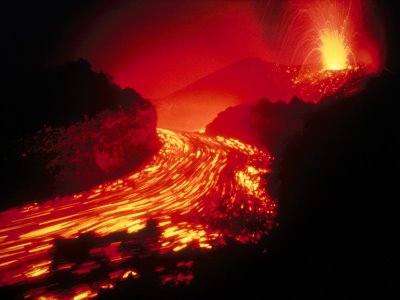
See, in 7138 (lolwut, I meant 1783) there was this long gorge thing in Iceland, and it spewed lava EVERYWHERE. The lava blobs (called lobes) crept across the ground and found a spot to cool. The blobs merged together into a small ring of cooled lava, the base of the tower. Then, heated water shot up from the middle of the ring, while lava poured onto it. The lava formed a tower around the geyser, creating the hollow lava towers of Iceland.

Well, unfortunately, that's all I have for today, so...

SCIENTIFIC WAFFLE OUT

Links:
Science News for Students
Lava Pic
The Pic of the Pillars is on the Website

Monday, November 18, 2013

Algae Aren't Plants?!

Algae Aren't Plants?!

The tiny, widespread organisms that are the staple food of many fish can be deceiving. Most people that aren't in the know don't realize that algae aren't plants. They're actually protists! Algae are plant-like protists, meaning they make their own food with photosynthesis. The difference is that most algae have no stems, leaves, or roots.

There are six different types of algae. I know, it sounds like a lot, but it really isn't. Just follow along and hopefully you'll understand!

Type #1: Green Algae
Green algae is a common sight on the ocean floor. What most people don't realize about green algae is that it gives our planet almost half the oxygen we breathe all by itself! Green algae is harmless, and beneficial to the environment. If we didn't have green algae, we'd have all been dead a long time ago from the lack of oxygen.

Type #2: Red Algae

These red wonders are able to use photosynthesis deep down in the ocean because of its red pigment. It helps it absorb sunlight better so the algae can survive. A form of red algae is seaweed, which makes carrageenan. Carrageenan is a substance used in different products to make them smoother.


Type #3: Brown Algae


Yep, kelp is a kind of algae!
=D
Brown algae. It's boring, nothing to it. I mean, I guess there's kelp, but....

Type #4: Euglenoids

Yep, the easy names are over with! Euglenoids are the flagellates of the algae, and they have special eyespots to sense light. Cool, right?

Type #5: Diatoms

Guess what? Diatoms are also known as golden algae, because they contain silica, the main element of glass, and it makes them golden. Not hard to say, is it?

Type #6: Dinoflagellates

Last and probably the worst, dinoflagellates, or fire algae. These mostrosities create red tide, which kills many fish and animals.
Now for cyanobacteria! Cyanobacteria are algae that may not be algae at all, but really bacteria! They are also known as blue-green algae.


Well, thats all for today, SCIENTIFIC WAFFLE OUT
LAWLLAWLLAWLLAWLLAWLLAWLLAWLLAWLLAWL
CELEBRATION TIME COME ON

Links:
Red Tide Pic
Diatom Pic
Euglena Pic
Kelp Pic
Seaweed Pic
Green Algae Pic
Brainpop on Algae (If you have an account)


Saturday, November 9, 2013

Kingdom Protista

Kingdom Protista

I've been doing things on the six kingdoms for a while, but I never really went in depth when talking about protists. So now it's time to start.
There are three kinds of protists.
1. Plant-like protists
2. Animal-like protists
3. Fungi-like protists
 
Today we will be mostly talking about the animal-like protists, which are actually called protozoa, but first lets get through the basics of protists.
  • All protists are eukaryotic, just like fungi, animals, and plants.
  • Most are microscopic, like bacteria.
  • They are their own kingdom.
Now for protozoa. There are three ways protozoa can move:
1. They can move using a flagellum.
2. They can move using pseudopods.
3. They can move using cilia.

Flagella are long, whip-like tails that whip and spin to move the protozoan. Most of the time, protozoa with flagella live in water.

Pseudopods, or "false feet", are used by protozoa such as amoebas.
These "false feet" are basically extensions of the protozoa that the use to pull themselves or pull food towards them. The protozoa change their shape into these "false feet".

Cilia are tiny hairs on the protozoan's body that help it move. These are mainly used in water.

Now for the four protozoan groups. :)
The first three you already know, right? If not, you'll understand why I said that when you look at what they are:

1. Flagellates
2. Amoebas
3. Ciliates

Now the fourth one you won't know (probably).

4. Sporozoans

Sporozoans are parasitic, or they do not help their host and in many cases harm them. Symbiotes are the opposites of these, they help their host.

Random Blog Post Ending
RANDOM
SCIENTIFIC
RANDOM
WAFFLE
RANDOM
OUT
RANDOM

And da links =) :
Brainpop
Deer Pic
Mushroom Pic
Tree Pic