Total Pageviews

Saturday, November 23, 2013

Damsel in Distress!

"Oh, help me, help me, i'm stuck at the top of this horrible tower!"

Sorry Rapunzel, it's eight feet tall.
Welcome back to the SCIENTIFIC WAFFLE!
Like the rainbow?
And the text going downwards on the left side of the screen?
Well, laziness is kind of taking over today so...
We stay like this.
   |      |

\__/\__/
This is Bob
Bob says "Hi,"
This is Bob when a car goes by
 _____
/  o  . o.\
|  .   O   |
\__._._/
Oh Bob
Oh poor bob...
NOW LETS GET TO:
THE SCIENCE
BUMMMM BUM
BA DA DA
DAAA DUM
BA DA DA
DA DUMM
BA DA DA DUMMMMMMM
okay, so now that we're done with cheesy written star wars music, we can start
So basically, in Iceland, the place that is actually green while Greenland is actually icy (lol) there are these cool stone pillars (naturally formed, of course) and they are about eight feet (2.5 meters for all you brits and scots out there) and researchers have found out what made them.
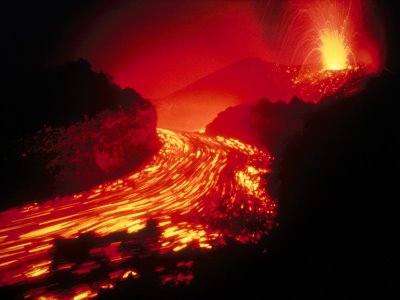
See, in 7138 (lolwut, I meant 1783) there was this long gorge thing in Iceland, and it spewed lava EVERYWHERE. The lava blobs (called lobes) crept across the ground and found a spot to cool. The blobs merged together into a small ring of cooled lava, the base of the tower. Then, heated water shot up from the middle of the ring, while lava poured onto it. The lava formed a tower around the geyser, creating the hollow lava towers of Iceland.

Well, unfortunately, that's all I have for today, so...

SCIENTIFIC WAFFLE OUT

Links:
Science News for Students
Lava Pic
The Pic of the Pillars is on the Website

Monday, November 18, 2013

Algae Aren't Plants?!

Algae Aren't Plants?!

The tiny, widespread organisms that are the staple food of many fish can be deceiving. Most people that aren't in the know don't realize that algae aren't plants. They're actually protists! Algae are plant-like protists, meaning they make their own food with photosynthesis. The difference is that most algae have no stems, leaves, or roots.

There are six different types of algae. I know, it sounds like a lot, but it really isn't. Just follow along and hopefully you'll understand!

Type #1: Green Algae
Green algae is a common sight on the ocean floor. What most people don't realize about green algae is that it gives our planet almost half the oxygen we breathe all by itself! Green algae is harmless, and beneficial to the environment. If we didn't have green algae, we'd have all been dead a long time ago from the lack of oxygen.

Type #2: Red Algae

These red wonders are able to use photosynthesis deep down in the ocean because of its red pigment. It helps it absorb sunlight better so the algae can survive. A form of red algae is seaweed, which makes carrageenan. Carrageenan is a substance used in different products to make them smoother.


Type #3: Brown Algae


Yep, kelp is a kind of algae!
=D
Brown algae. It's boring, nothing to it. I mean, I guess there's kelp, but....

Type #4: Euglenoids

Yep, the easy names are over with! Euglenoids are the flagellates of the algae, and they have special eyespots to sense light. Cool, right?

Type #5: Diatoms

Guess what? Diatoms are also known as golden algae, because they contain silica, the main element of glass, and it makes them golden. Not hard to say, is it?

Type #6: Dinoflagellates

Last and probably the worst, dinoflagellates, or fire algae. These mostrosities create red tide, which kills many fish and animals.
Now for cyanobacteria! Cyanobacteria are algae that may not be algae at all, but really bacteria! They are also known as blue-green algae.


Well, thats all for today, SCIENTIFIC WAFFLE OUT
LAWLLAWLLAWLLAWLLAWLLAWLLAWLLAWLLAWL
CELEBRATION TIME COME ON

Links:
Red Tide Pic
Diatom Pic
Euglena Pic
Kelp Pic
Seaweed Pic
Green Algae Pic
Brainpop on Algae (If you have an account)


Saturday, November 9, 2013

Kingdom Protista

Kingdom Protista

I've been doing things on the six kingdoms for a while, but I never really went in depth when talking about protists. So now it's time to start.
There are three kinds of protists.
1. Plant-like protists
2. Animal-like protists
3. Fungi-like protists
 
Today we will be mostly talking about the animal-like protists, which are actually called protozoa, but first lets get through the basics of protists.
  • All protists are eukaryotic, just like fungi, animals, and plants.
  • Most are microscopic, like bacteria.
  • They are their own kingdom.
Now for protozoa. There are three ways protozoa can move:
1. They can move using a flagellum.
2. They can move using pseudopods.
3. They can move using cilia.

Flagella are long, whip-like tails that whip and spin to move the protozoan. Most of the time, protozoa with flagella live in water.

Pseudopods, or "false feet", are used by protozoa such as amoebas.
These "false feet" are basically extensions of the protozoa that the use to pull themselves or pull food towards them. The protozoa change their shape into these "false feet".

Cilia are tiny hairs on the protozoan's body that help it move. These are mainly used in water.

Now for the four protozoan groups. :)
The first three you already know, right? If not, you'll understand why I said that when you look at what they are:

1. Flagellates
2. Amoebas
3. Ciliates

Now the fourth one you won't know (probably).

4. Sporozoans

Sporozoans are parasitic, or they do not help their host and in many cases harm them. Symbiotes are the opposites of these, they help their host.

Random Blog Post Ending
RANDOM
SCIENTIFIC
RANDOM
WAFFLE
RANDOM
OUT
RANDOM

And da links =) :
Brainpop
Deer Pic
Mushroom Pic
Tree Pic

Sunday, October 27, 2013

Crop Circles: What They Are and Who Makes Them

Crops and Their Close Companions

Now, I'm sure you've all heard of crop circles. These round phenomenons occurring in fields of wheat have been around for years. Some have been proven to have been made by humans. Some people just do it on a whim, some for pranks, and some to even make money. Others, however, are believed to have been made by some extraterrestrial force.

The idea of crop circles aroused in the 1500's where a comic showing a monster making a crop circle was released. The first crop circles appeared around the 1800's. They started out as just normal circles, and there weren't that many. Then they started getting more complicated and grew in numbers in the 1980's.
 Farmers grew agitated over the loss of crops. Crop circles were also becoming known as tourist attractions for believers in the paranormal. 

Out of the thousands that have popped up, only a few crop circles have been verified to be made by humans. The world will just have to wait and see what the outcome of this strange phenomenon is.

Stay tuned for another post at THE SCIENTIFIC WAFFLE

Links:

Monday, October 21, 2013

Diamond Rain

It's Rainin' Diamonds, Hallelujah, It's Rainin' Diamonds,


Hello WAFFLES AND PANCAKES and welcome to the  SCIENTIFIC WAFFLE
YA I SAID IT OOHHH
So basically diamonds are probably raining on Neptune and Uranus.
Now it's time to LEARN WHY!
See, Neptune and Uranus are filled with METHANE THE MAGICAL GAS
 
Methane is like coal
If you compress it
And heat it
DIAMONDS! =D

 
You get it?
No?
Well then let me explain it to you! =D
Basically, if you put methane under 1000 (Not over 9000) times atmospheric pressure, it gets super compressed. Then if you heat it to 5000 (Still not over 9000) degrees, it will turn into diamond dust.
So if Neptune and Uranus are made of methane...
And the gravity there is much, much, extremely much stronger than it is here...
What do you think will happen?
Do you really not know?
Really?
I am severely dissapointed in you, reader.
You thought it was just going to rain diamonds.
Well, you're wrong.
Well, what's really going to happen is...
TONS OF DIAMONDS WILL RAIN DOWN AND FALL TO THE MIDDLE OF THE PLANET AND YEAH
See? It's not going to rain diamonds, it's going to rain TONS of diamond.
=)
But this is only a theory. Im sorry. =(
By the way, sorry if the first few lines are wierd at the top. Blogger no like me. =)
Seriously though, I think this is my favorite thing yet. Diamonds raining on other planets? Sweet
But I hope you liked this post! Check back in a week at the...
SCIENTIFIC WAFFLE
Links:


Sunday, October 6, 2013

Why Do Leaves Change Their Color?

Why Do Leaves Change Their Color?

        Many people do not think about why leaves change color, they just think about as something that leaves do when the temperature starts going down. But there is a reason. OMG there is???!!!
Woahhhh they're changing cooool
Yeah there is! =D Now lets talk 'bout dat reason. So basically, the chlorophyll in the leaves reflect green light, which makes the leaves green. When the sun starts setting earlier and earlier, the chlorophyll, that green pigment in the chloroplasts, the plant starts to stop producing chlorophyll. When it does that, it reveals the other colors like yellow, orange, and brown, which were ALWAYS THERE. YEAH THAT'S RIGHT I JUST BLEW UR MIND BRO. So, after that then the leaves fall and then they regrow in the winter. But it ain't dat simple.

First of all, lets talk about why the leaves change their color. See, there are two pigments that cause the leaves to be colored. The pigments that make leaves yellow, orange, or brown are called carotenoids, and the pigments that make leaves red or purple are anthocyanins. Some examples of foods that have carotenoids are pumpkins and carrots (carrot = carotenoids). Examples of foods that have anthocyanins are blueberries and strawberries.

Now for why leaves fall off the tree. See, there's a little piece of cork that grows in the base of the leaf between the leaf and the branch. Every fall, the cork grows to its limit and completely blocks off the leaf from the rest of the tree. The leaf then is blown off by the wind or simply gets so feeble it falls.

A factor of how dull or bright a leaf is in the fall depends on how the weather is. Warm weather makes the colors brighter, while cold and dry weather makes the colors more dull.

Some trees do not lose their leaves in the winter. This is because the trees have an anti-frost on the leaves, so they are protected from the cold. They also do not require as much sunlight to make food.

Well, that's all for today. Scientific Waffle out.

Links:
All About Leaves
Color Changing Leaves

Thursday, September 26, 2013

Carnivorous Plants

Carnivorous Plants

PIRANHA PLANT OH GOSH NOOOOOOO
Hey guys DA SCIENTIFIC WAFFLE here. Up there /\ is my "friend" the piranha plant. He's carnivorous, which means that he attracts, captures, and eats insects or other small animals. YEAH THAT'S RIGHT HE DOESN'T JUST EAT INSECTS. =O
Now we'll be talking about some of the other carnivorous plants out there, such as the bladderwort, which uses bladder traps to catch prey. Bladders? Gross! =/
A bladder trap is a trap where little closed tubes sit underwater. The tubes open when a bug gets near, sucking in the water and the bug with it. The bug then goes down the tube into the bladder, where it is digested.
Then there is the sundew. The sundew is this plant with sticky water droplets on its leaves. Get it, Sundew, dew meaning water droplets? Well, anyways, the bugs are attracted to the drops' smell and they get stuck in them. The leaf then curls up and emits digestive fluid to dissolve them. There are 100 different types of sundews, and half of them can be found in Australia. Sundews can also be found on every continent besides Antarctica.
Next up is the pitcher plant. The pitcher plant, which looks like a pitcher, like, for drinks, attracts insects with their sweet-smelling, sweet-tasting nectar. If the insect goes of the rim of the plant into it, it will fall into a pool of water at the bottom where it drowns. The bug will not be able to climb back up because of microscopic downward-facing spines the cover the inside of the plant.
There is also a type of trap called the flypaper trap, which traps bugs on its sticky leaves. The bugs decompose and the nutrients are absorbed.
Last but not least, and everyone's favorite, the VENUS FLYTRAP! =D
SNAPPA SNAPPA SNAPPA SNAPPA
The Venus flytrap snaps up prey when it lands on a mouth-like leaf. The leafs shuts, digestive fluids fill the leaf, and the little critter is dissolved. Yay!
Venus flytraps can be found in New Orleans in the United States.
Well, that's all for today.
Scientific Waffle out.